
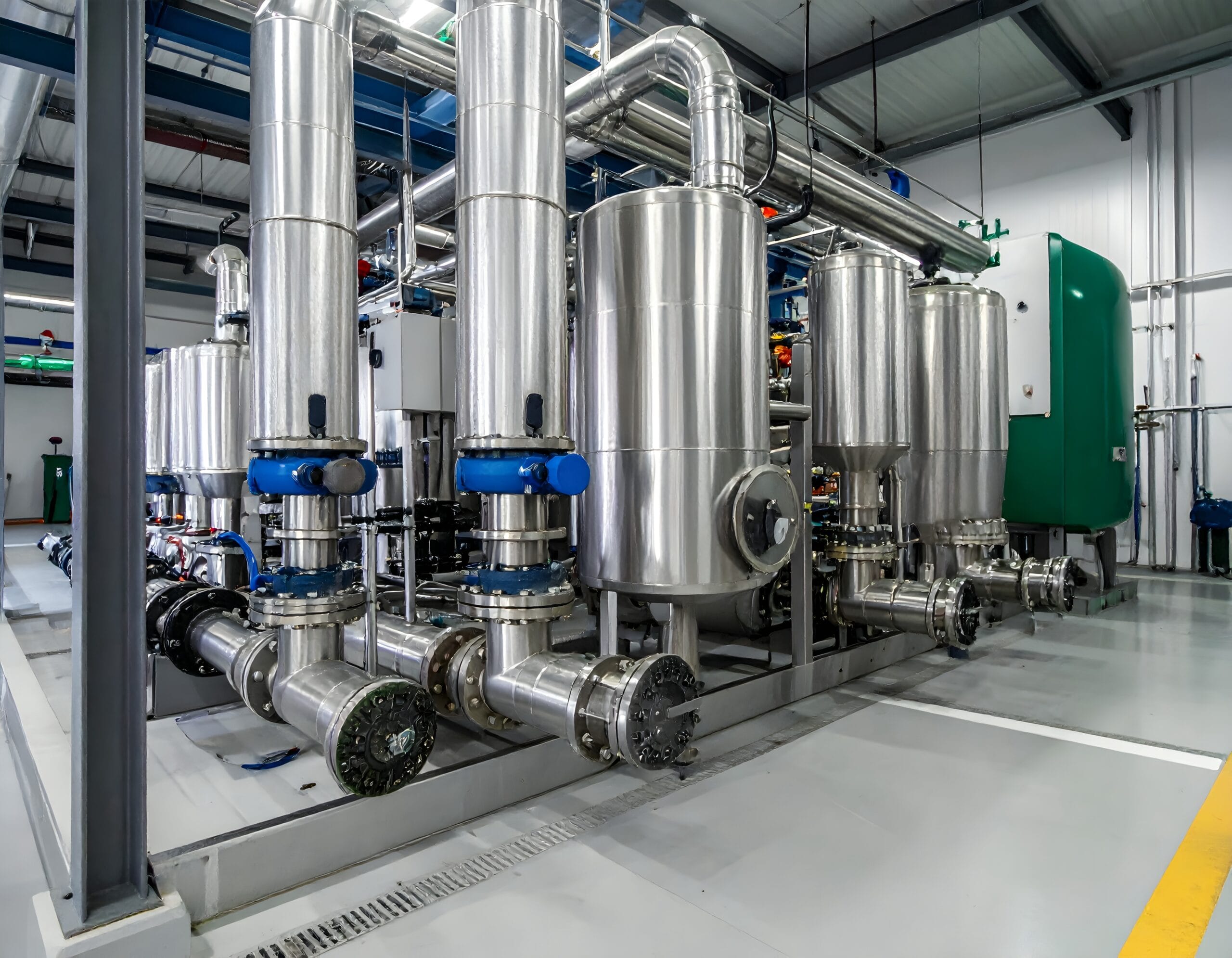
What Is Front End Loading? FEL Stages for Chemical Projects
What Is Front End Loading? FEL Stages for Chemical Projects
Front end loading is where a plant project is quietly won or lost. Long before the first foundation is poured, owners make the choices that shape the final cost: the process route, the plant size, the layout and the main equipment. Get these right early, and construction runs far more smoothly. Get them wrong, and every fix becomes slow and expensive. So how do successful owners plan this early phase? In this guide, we walk through each stage of front end loading, one step at a time.
What front end loading means in project definition
Think of front end loading, or FEL, as doing your homework before you spend serious money. It is the planning an owner completes before committing to detailed engineering and construction. Some people also call it front end planning.
The idea is simple. Put the effort in early, when changes cost little, rather than late, when they cost a lot. In other words, front end loading turns a rough idea into a clear project definition that the owner can approve with confidence.
FEL breaks project definition into stages, and each stage ends with a review. Some owners add an extra early stage (FEL-0) or a later one (FEL-4). However, most projects follow the common three-stage model, and that is what this guide covers. For a general overview, you can read about front-end loading on Wikipedia.
FEL 1, FEL 2 and FEL 3 at a glance
Each stage of front end loading asks a sharper question than the one before. At the same time, the cost estimate becomes more reliable. Here is a quick look at the three FEL stages.
| Stage | Main question | Key outputs | Typical estimate accuracy | Gate decision |
|---|---|---|---|---|
| FEL-1 | Is this opportunity worth pursuing? | Market study, capacity, site options, technology screening | Rough, order of magnitude | Continue to concept work or stop |
| FEL-2 | Which concept is best? | Selected process route, process flow diagram, heat and mass balance | Better, based on the chosen concept | Continue to FEL-3, rework or stop |
| FEL-3 | Is the project ready to build? | FEED package, cost estimate, schedule | Budget level, suitable for approval | Final investment decision |
FEL-1: opportunity and feasibility
FEL-1 is the first stage of front end loading, and it starts with an honest question: is this idea worth more time and money? To answer it, the team looks at market demand, likely plant capacity and possible sites. It also compares the technologies on offer and, where needed, possible licensors.
The cost estimate at this stage is rough, often based on similar plants rather than detailed equipment lists. Even so, it does an important job. It shows the owner whether the project could deliver an acceptable return.
In our experience, the most valuable FEL-1 result is a clear picture of what the plant must achieve. For example, product quality, raw material sources and future expansion plans all affect every later decision. Quanta’s process technology services support owners at this early stage, especially when they are bringing new products to market.
FEL-2: concept selection
Once the opportunity looks promising, FEL-2 asks the next question: what is the best way to build this plant? A common example is choosing between a batch process and a continuous one. Owners may also compare different process routes or plant sizes.
The team weighs each option on cost, safety, ease of operation and risk. Then, for the winning concept, it prepares a process flow diagram and a heat and mass balance.
During conceptual design, Quanta evaluates processes for technical feasibility, financial viability and ease of operation. That way, the owner moves forward with one clear concept instead of several half-finished ideas.
FEL-3: where FEED fits
FEL-3 is the final stage of front end loading, where the chosen concept becomes a defined project. Its main activity is FEED, which adds layouts, equipment details, a safety review, a cost estimate and tender documents. You can learn more about what FEED engineering involves in our earlier guide. Some owners also weigh a basic engineering package against full FEED at this point, which is a separate decision. Quanta’s front end engineering design services support owners through this stage. By the end of FEL-3, the owner has everything needed for a final investment decision.
The stage gate process between FEL phases
Between each stage of front end loading sits a checkpoint called a stage gate. Think of it as a pause to ask, “Are we still on the right track?” The owner’s team, often including finance and operations, reviews the work before releasing money for the next stage.
At each gate, reviewers usually look at:
- Whether the business case still makes sense
- How complete the technical work is
- How reliable the cost estimate is
- Which major risks remain open
- What the next stage will need in time and budget
Every review ends with one of three outcomes. Go means the project moves ahead. Recycle means the team reworks part of the current stage. Stop means the owner ends or pauses the project before spending more. Stopping can feel like failure, but a good stage gate process often saves an owner from a much bigger loss later.
Why strong front end planning cuts cost and schedule overruns
Here is a simple truth: changes are cheap on paper and costly on site. Moving a piece of equipment on a drawing takes very little time. Moving it after foundations and piping are in place can take weeks.
In our experience, owners who invest properly in front end loading face far fewer unexpected issues during construction. This matters even more when a project changes how a plant operates. For example, Quanta helps clients scale up from a pilot plant to full commercial production and convert batch processes into continuous ones. In both cases, careful early planning catches problems that would be much harder to fix later.
Strong front end planning also pays off during tendering. Contractors can price well-defined work more accurately, which makes their bids easier to compare.
FEL in project management: how Quanta supports each stage
In project management terms, FEL gives every stage a clear goal and a clear decision point. Quanta Process & Project Services has supported the process industries from Vadodara since 2004, and our services line up closely with the stages of front end loading:
- FEL-1: process technology services to assess technologies and new product opportunities
- FEL-2: conceptual design to evaluate and select the best process
- FEL-3: front end engineering design to define the project, its cost and its schedule
- After FEL: detailed engineering, project management and commissioning
Because one team can support every stage, knowledge carries forward instead of getting lost at each handover.
Planning a new plant or an expansion? Write to us at info@quantaprocess.com or call +91 63582 86343. We will help you work out which stage your project is in and what it needs next.
FAQ
What are the FEL stages?
Front end loading usually has three stages. FEL-1 checks whether the opportunity is worth pursuing. FEL-2 compares options and selects the best concept. Finally, FEL-3 develops that concept, mainly through FEED, into a defined project ready for an investment decision.
Is FEL the same as FEED?
No, although the two terms are often mixed up. FEL is the full planning process across all three stages. FEED is the main engineering work inside FEL-3. In other words, FEED is one part of FEL.
How long does each FEL stage take?
It depends on the size and complexity of the project. Generally, FEL-1 is the shortest stage, while FEL-3 takes the longest because it involves every engineering discipline. Smaller projects can move through all three stages faster than large greenfield plants.
Who should lead FEL on an owner’s project?
The owner should lead FEL, because the owner makes the investment decision at each gate. In practice, the owner’s project manager runs the process, while an engineering consultant such as Quanta provides the technical support.
Front end loading usually has three stages. FEL-1 checks whether the opportunity is worth pursuing. FEL-2 compares options and selects the best concept. Finally, FEL-3 develops that concept, mainly through FEED, into a defined project ready for an investment decision.
No, although the two terms are often mixed up. FEL is the full planning process across all three stages. FEED is the main engineering work inside FEL-3. In other words, FEED is one part of FEL.
It depends on the size and complexity of the project. Generally, FEL-1 is the shortest stage, while FEL-3 takes the longest because it involves every engineering discipline. Smaller projects can move through all three stages faster than large greenfield plants.
The owner should lead FEL, because the owner makes the investment decision at each gate. In practice, the owner’s project manager runs the process, while an engineering consultant such as Quanta provides the technical support.