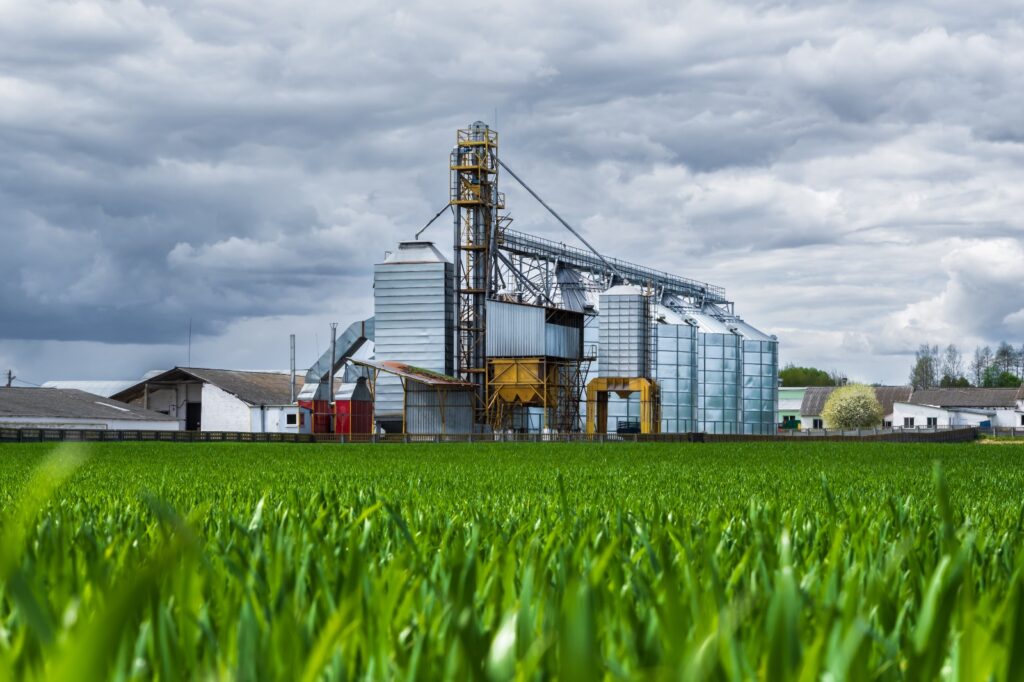
What Makes Greenfield Expansion of Process Plant Design Different?
Starting a chemical facility from a blank canvas leaves Stakeholders free to develop a process how they see fit. However, this approach has significant responsibilities. Unlike brownfield revamps, greenfield expansion requires creating infrastructure, utilities, environmental control, and logistics systems from scratch. The number of project-specific decisions made during these early stages can be overwhelming.Quanta has also supported grass-root chemical plant projects involving engineering, procurement and project management.
Why FEED Engineering Is Critical for Greenfield Projects
Front-End Engineering Design (FEED) is the key stage in the process of chemical plant construction. Completed after the work on conceptual feasibility, FEED establishes technical requirements for the implementation of the chosen project solution. The results of this design stage make it possible to understand the overall project cost and major risks, which is why FEED serves as the primary basis for Final Investment Decisions (FID).
Key FEED Engineering Considerations for Chemical Plants
When it comes to FEED for a greenfield expansion, there are several critical areas that need to be covered:
- Site master planning & layout to establish the spatial allocation of future development stages
- Process technology and equipment selection
- Utility planning
- EHS considerations, including loss prevention and flare systems
Moving from FEED to Basic Engineering Design and Detailed Engineering Design
Coming up with a feasible solution for a chemical plant expansion requires extensive project-specific knowledge. That is why FEED engineering designs are usually used as a basis for moving towards more detailed disciplines. Thus, when FEED is completed, there is a transition to developing Basic Engineering Design (BED) to identify piping and logic schemes and functional safety requirements. BED, in turn, serves as the starting point for Detailed Engineering Design, which produces the necessary drawings and three-dimensional models for fabrication and detailed construction.
How FEED Engineering Helps Optimize Cost, and Execution schedule.
The success of a project under a FEED contract heavily relies on how much uncertainty there is about its technical scope and scale. Thorough front-end engineering design reduces the risk of costly changes and enables project delivery within budget. Thus, FEED helps estimate project costs accurately (achieve AACE Class 3/2 cost estimate) and develop realistic master schedules. Besides, resolving constructability issues at the design stage decreases the number of engineering change orders (ECOs), minimizes procurement lead time, and reduces overall cost spendings.
Best Engineering Practices for Greenfield Chemical Process Plant Expansion Projects
To achieve the best results from FEED for a chemical plant expansion, it is critical to utilize the CII Project Definition Rating Index to assess the project’s definition level before FID, initiate HAZOP and SIL analysis during the FEED preliminary phase, standardize equipment specifications, and establish the necessary interfaces between process, civil, mechanical, and electrical engineering.
Conclusion
Investing in comprehensive FEED engineering is the best way to ensure that greenfield expansion will follow the well-defined technical scope. With clearly established project limits and FEED cost estimate, it becomes possible to choose the most suitable project delivery method for a chemical process plant construction.
FAQ