Produced water treatment is one of the most underestimated parts of an oil and gas operation and one of the most expensive if it’s ignored. In mature fields, the volume of water brought up with the hydrocarbons often exceeds the volume of oil and gas itself. Every barrel of that water has to be separated, treated, and either disposed of or reused within tightening environmental limits, which makes produced water as much a cost and compliance problem as it is a technical one.
What Is Produced Water and Why It Needs Treatment
Produced water is the water that comes to the surface along with oil and gas during production, a mix of formation water trapped in the reservoir and any water injected for enhanced recovery. It typically carries dissolved and dispersed oil, salts, heavy metals, naturally occurring radioactive materials, and production chemicals. None of that can be discharged to surface water or reinjected into a formation without treatment; doing so risks contaminating groundwater, damaging reservoir permeability, and breaching regulatory discharge limits.
Key Produced Water Treatment Processes
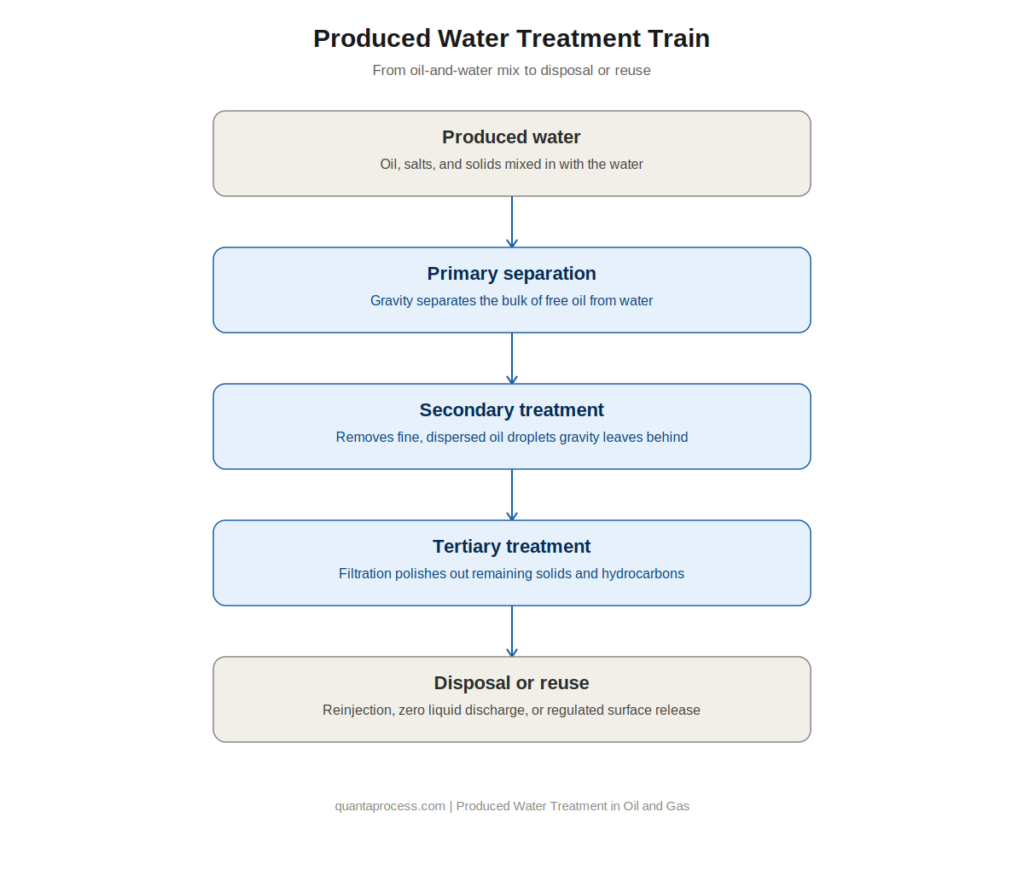
A produced water treatment train is generally built in stages, each removing a finer level of contamination than the last.
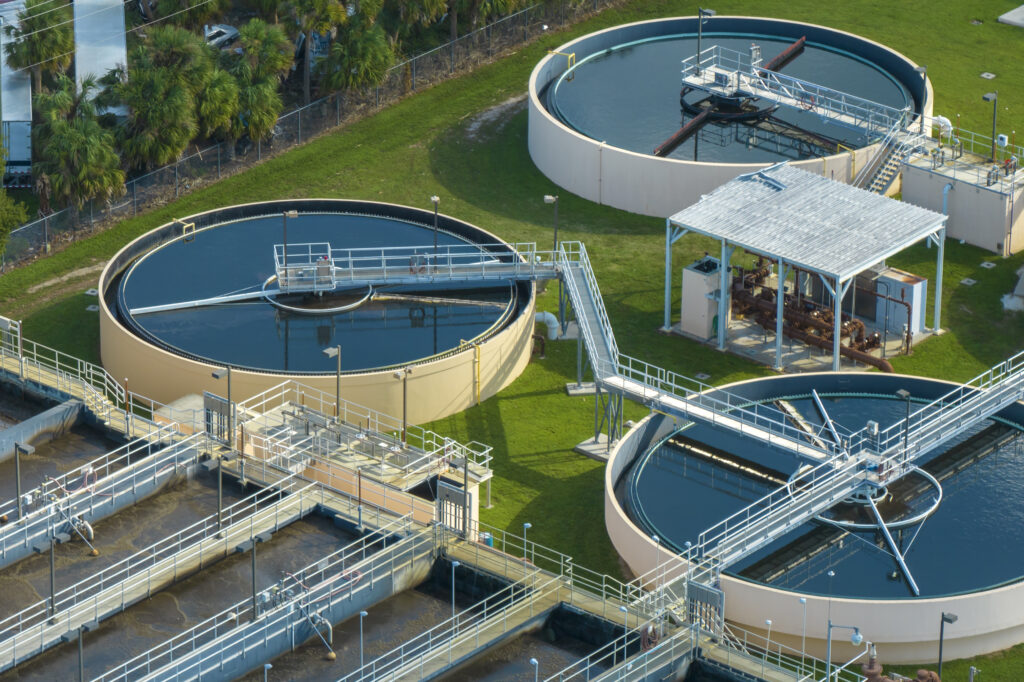
Primary separation: API separators and other gravity-based systems split the bulk of free oil from water using density differences, forming the first line of treatment.
Secondary treatment: Hydrocyclones, induced gas flotation (IGF), and corrugated plate interceptors (CPI) remove dispersed oil droplets that gravity separation alone can’t catch.
Tertiary treatment: Media filtration or membrane filtration polishes the water further, targeting suspended solids and residual hydrocarbons ahead of disposal or reuse.
Disposal/reuse routes: Depending on the field and local regulations, treated water may be reinjected into the reservoir, processed toward zero liquid discharge (ZLD), or released under a regulated surface discharge permit.
Regulatory and Environmental Considerations in India
Discharge of produced water in India falls under Central Pollution Control Board (CPCB) norms, which set limits on oil and grease content and other parameters before water can be released. Regulatory pressure, combined with water scarcity concerns in many onshore basins, is pushing operators toward zero liquid discharge systems rather than relying on surface discharge, particularly for new field developments.
Common Challenges in Produced Water Management
Produced water rarely behaves consistently over a field’s life, which is exactly what makes it hard to design for:
- Variable oil-in-water content as water cut increases through the field’s producing life, often requiring the treatment train to be re-rated well before end of life.
- Scaling and souring, where mineral scale buildup and reservoir souring from sulfate-reducing bacteria activity complicate both treatment and reinjection.
- Sludge handling costs, which accumulate steadily and are frequently underestimated in early project economics.
- Capex-vs-opex tradeoffs between building for peak water cut upfront versus phasing capacity additions as water volumes grow.
Modular Produced Water Treatment Systems
Skid-mounted, modular produced water treatment packages are a practical fit for remote or marginal fields where a permanent stick-built facility isn’t justified by field economics. Because water cut typically rises over a field’s life, modular systems also make it far easier to scale treatment capacity in stages rather than committing to a single oversized design from day one. We go into more detail on this approach in our skid-mounted systems post.
How Quanta Engineers Produced Water Treatment Solutions
Quanta’s process engineering team handles produced water treatment design end to end process design, equipment sizing, and skid packaging as part of our broader Oil & Gas Processing supply line for upstream and midstream operators. With nearly 25 years of engineering experience across process-intensive industries, we design treatment trains that account for how water cut and quality actually change over a field’s producing life, not just at day one.
If produced water is becoming a bigger line item on your project than expected, get in touch to start a produced water treatment design review.
FAQ